Kyoto Annual Meeting 2025 ― Field Trip to Hira and Ogi
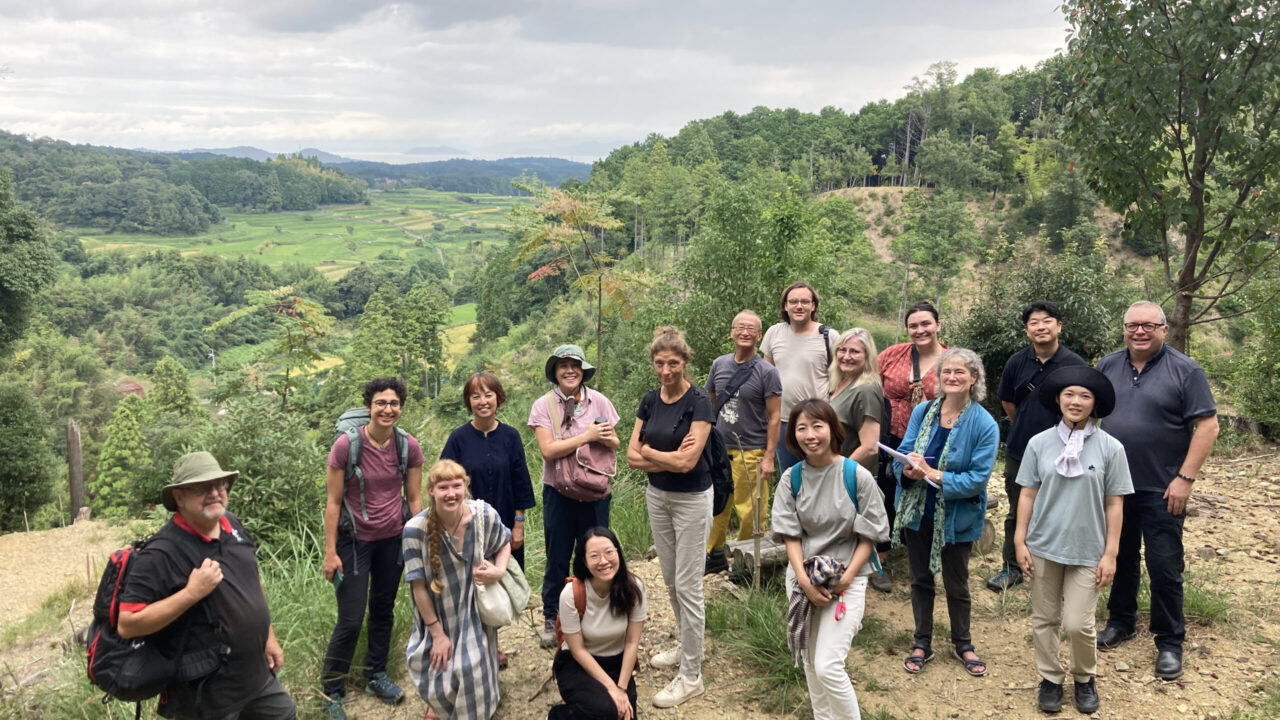
On the fourth day of the SATOCONN General Meeting held in Kyoto in September 2025, project members took part in a field trip to Hira and Ogi, one of the project’s six Living Labs.
The group departed from RIHN in hired vehicles and travelled for approximately an hour to their first destination, Ogi.
Ogi: A Historic Satoyama Village
Ogi is a historic rural settlement located at the eastern foot of Mount Hiei in Otsu City, Shiga Prefecture. During the medieval period, it developed as an estate belonging to Enryakuji Temple on Mount Hiei, with rice cultivation forming the basis of local agriculture. Today, Ogi retains its beautiful terraced rice fields and traditional village landscape, along with distinctive cultural traditions, including local water management systems and festivals that have developed through generations of interaction between people and nature.
Our first visit was to meet the renowned nature photographer Mitsuhiko Imamori and his son, Motoki Imamori. Mitsuhiko Imamori is one of the key figures who helped introduce the concept of Japanese Satoyama to the world through his photography and films, capturing the beauty of Satoyama landscapes and the diverse wildlife that inhabits them.
We visited his atelier and explored the surrounding Satoyama landscape, including an area known as “Meisui no Satoyama”, while learning about its management practices and the wildlife found there.
His atelier is known as “Aurelian’s Garden”. The word “Aurelian”, derived from Latin, refers to a person who loves butterflies. Through careful human management, the garden maintains its grassland habitats and flowering plants, creating an environment that attracts a remarkable diversity of butterfly species.
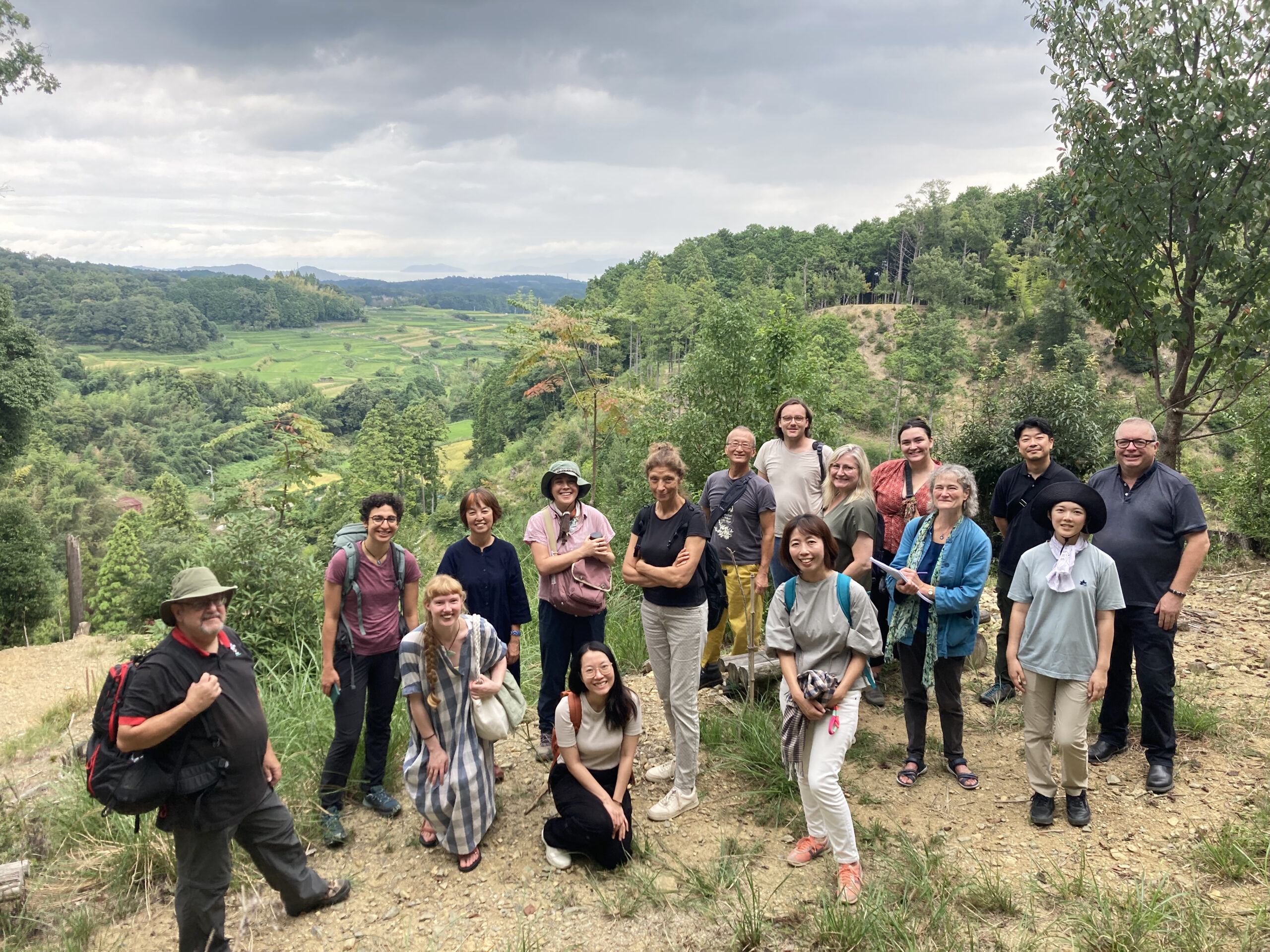
Group photo in Ogi
Experiencing Ogi’s Traditional Drumming
After leaving Mr Imamori’s atelier, we headed to the Ogi Taiko Preservation Hall, where we enjoyed lunch prepared by “Wasaina Ogi”, a local community initiative working to conserve the landscape and revitalise the area. The colourful and delicious lunch boxes featured a variety of locally sourced ingredients, including rice grown in Ogi’s terraced fields.
Following lunch, we had the opportunity to experience Ogi Taiko, a traditional form of Japanese drumming. With a history said to span more than a thousand years, Ogi Taiko has been designated an Intangible Folk Cultural Property by Otsu City.
Under the guidance of members of the Ogi Taiko Preservation Society, we practised a traditional rainmaking piece, following musical notation and learning to coordinate the rhythms with accompanying calls.
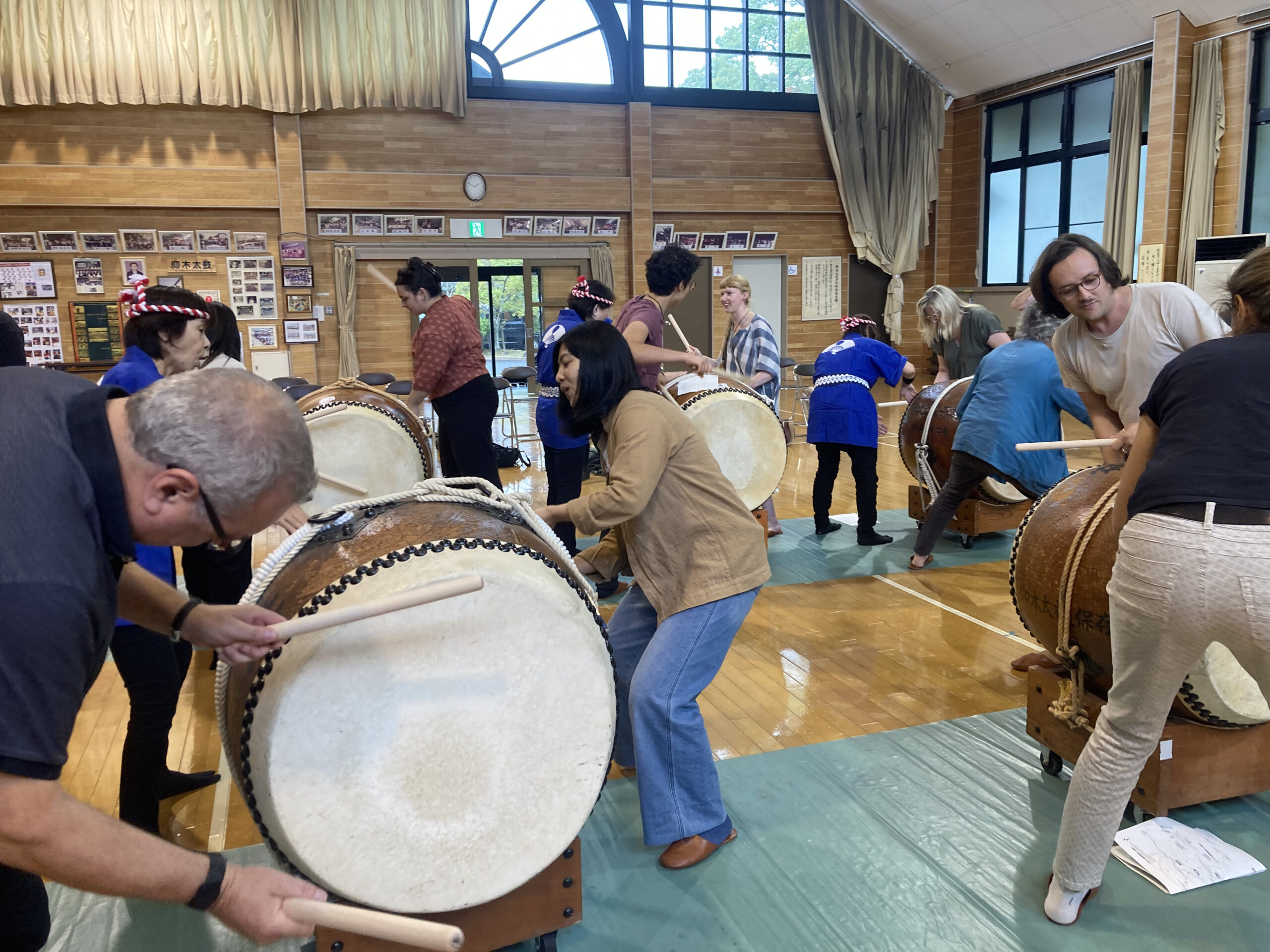
Feeling the powerful vibrations of the drums as we played together gave us a vivid sense of the role that artistic and cultural activities can play in bringing communities together, one of the themes explored by the SATOCONN project.
To everyone’s surprise and delight, a sudden downpour followed our performance!
Hira: Where Mountains, Villages and Lake Meet
We then continued north to Hira. Fortunately, the heavy rain in Ogi stopped during our journey.
Hira is another historic rural area, situated further north and closer to the shores of Lake Biwa. One of its distinctive characteristics is the close relationship between the Hira Mountains, settlements, agricultural land and Lake Biwa, all interconnected within the landscape of everyday life.
Historically, the area supported livelihoods through forestry, timber production and the extraction of distinctive striped stone. The waterways of Lake Biwa also enabled trade with communities on the eastern shore of the lake and with Kyoto.
Our first stop in Hira was a visit to the stone-walled terraced rice fields maintained through the Moriyama Tanbo Project, an initiative associated with the Hira–Ogi Living Lab.
Professor Fukamachi of Kyoto University, a member of the project team, guided us through the rice terraces, where harvesting had recently been completed. We learned about hasagake, a traditional method of drying harvested rice on wooden racks, and observed the irrigation channels carrying mountain water from the Hira foothills through forests, settlements and agricultural land towards Lake Biwa.
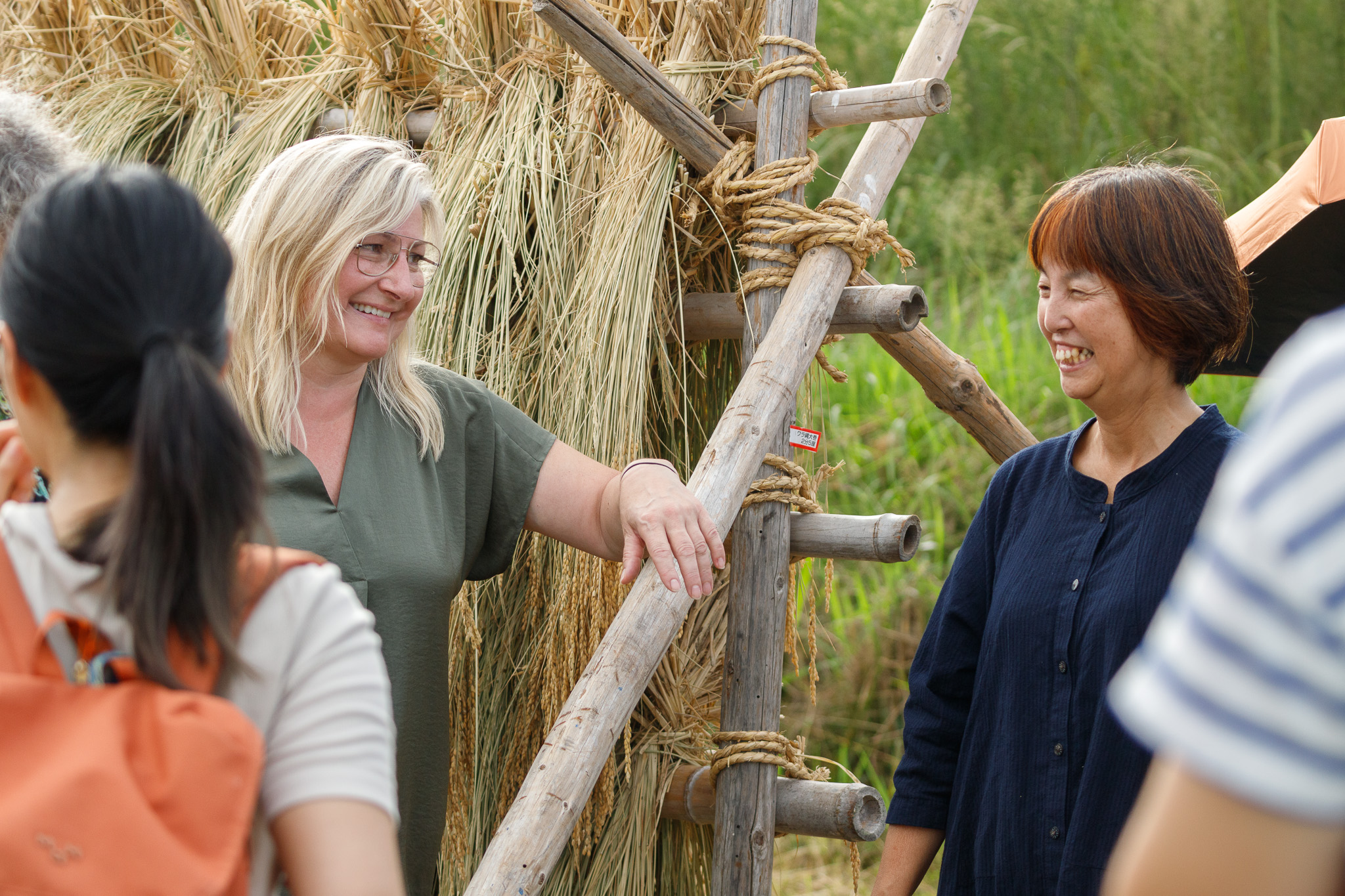
Professors Camila and Fukamachi chatting in front of the traditional hasagake rice-drying racks
Horai Marche: A New Generation of Community Activities
Our final stop was the venue of Horai Marche, a relatively recent community initiative led by younger generations. We met with one of the organisers to learn about its activities.
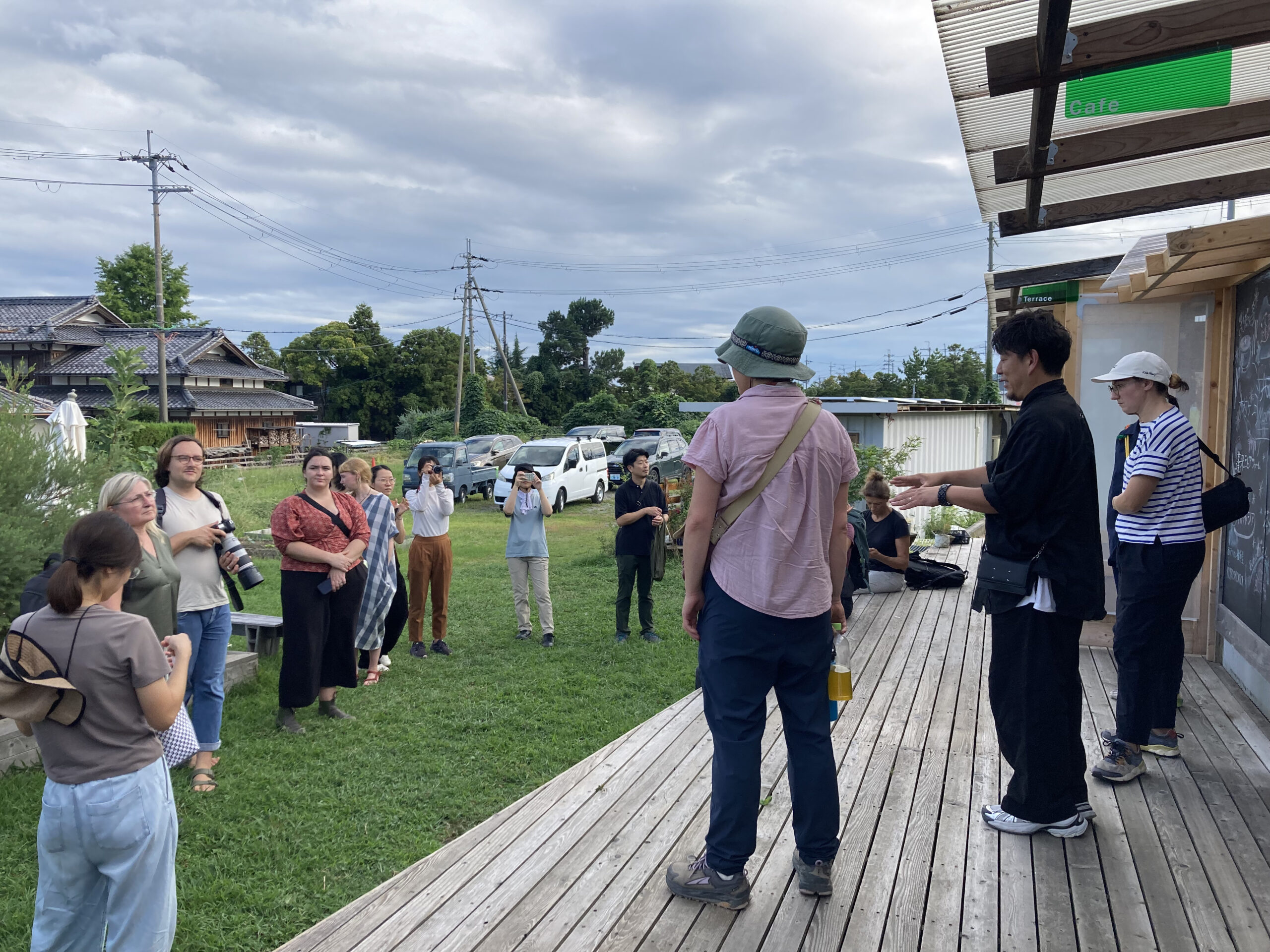
Horai Marche is held on the first Sunday of every month at “Horai no Ie”, a community workshop near JR Horai Station. The market brings together a changing selection of stalls offering food, crafts and other products made using local ingredients and materials.
With its friendly and welcoming atmosphere, the market provides opportunities to enjoy delicious food and discover handmade goods that enrich everyday life. It has also become a popular gathering place, attracting many younger visitors and helping to foster new connections within the community.
Bringing Satoyama Discussions to Life
After a full day of visits and activities, the group began the journey back in the late afternoon.
During the preceding two days of the General Meeting, project members had engaged in extensive discussions about Satoyama systems in Hira–Ogi and other SATOCONN study sites. The field trip provided a valuable opportunity to experience the Hira–Ogi landscape first-hand, meet the people who maintain and shape it, and deepen our understanding of the relationships between nature, culture and local communities.
Photos: Fabio Wolf Pierre König